Thursday, November 5, 2015

Digital literacy and what it means for healthcare

by Courtney Lyles, PhD

Should healthcare organizations be taking a major role in increasing the overall digital literacy of their patients? 

In my last post I talked about how most patients in our health system, the SFHN, want to use the internet to manage their health care and health, but don’t have the proficiency they need to be able to do so. I wanted to take that idea one step further. If our patients often can look something up on Google but don’t know how to use an email account (which is often required for signing up to access your electronic health record online) – should we be providing them with basic technology classes?  The answer I keep coming back to is “yes,” and here are a few reasons why:

Wednesday, October 14, 2015

Partnerships to Prevent Violence: ARISE

By Leigh Kimberg, MD

Each day, an overwhelming majority of our patients arrive in clinic wishing that their healthcare providers would ask them questions about how their personal relationships affect their health and, more specifically, whether an intimate partner, family member or other person has hurt or threatened them.  And, despite the requirement by the Affordable Care Act that all women and girls be offered interpersonal violence (IPV) (intimate partner violence and sexual assault) screening, brief counseling and referral, healthcare providers and healthcare systems have not institutionalized this practice.  “Aspire to Realize Improved Safety and Empowerment” (ARISE), a partnership program newly funded by the Office of Women’s Health in the US Department of Health and Human Services, will fully institutionalize these life-saving practices in the San Francisco Health Network primary care system.

Wednesday, September 2, 2015

“Where Can This Person Go?”: A Plea for the Expansion of Medical Respite Services


by Soraya Azari, MD

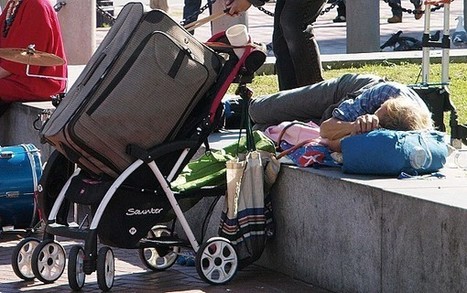
While recently working in the hospital I was often asked by my interns and medical students: “so where can this person go?”  An example: a 53 year old homeless man, wheelchair-bound from prior injuries, who had his wheelchair stolen during an assault, which led to pneumonia and hospitalization.  He quickly improved with intravenous antibiotics, was medically stable, and no longer met criteria for inpatient hospitalization.  So then the question is where should he go? 

Thursday, July 23, 2015

Moral Compass

By Dean Schillinger, MD

Dear Colleagues,

Today we are releasing a new film, "Biker with a Moral Compass: Dr. Dick Fine and the Evolving Culture of SFGH", a documentary portraying and paying tribute to the life, times and contributions of UCSF and SFGH physician Dick Fine MD, Founder and Former Director of the General Medicine Clinic, among many things.

Please feel free to share this film with colleagues, friends, and family, and consider using it as part of your health professions trainings.    

Finally, I would like to take this opportunity to ask you to consider making a donation on behalf of Dick, and in support of the many causes he has steadfastly stood for. The San Francisco General Hospital Foundation has created the Richard H. Fine Fund, whose purpose is to support education, clinical innovation, and discovery in The Richard H Fine People's Clinic. You can donate here:
  • Go to https://sfghf.org/support-us/donate/
  • Under the “Please use my Gift” section select “For the following Program or Department” and write in “In Honor of Richard H Fine DGIM Fund”

 Now....ENJOY THE SHOW !


Tuesday, July 14, 2015

Connecting the dots: Health information technology expansion and health disparities

By Courtney Lyles, PhD, Dean Schillinger, MD and Urmimala Sarkar, MD, MPH

Check out our newest essay in PLOS Medicine outlining how health technology could be better designed and implemented to meet the needs of diverse patient populations:

http://www.plosmedicine.org/article/info%3Adoi%2F10.1371%2Fjournal.pmed.1001852

Thursday, June 18, 2015

Making Older Homelessness a Never Event

by Margot Kushel, MD

On April 2, Bevan Dufty, (@BevanDufty) the director of the HOPE program (Housing Opportunity, Partnerships and Engagement) for San Francisco (aka the official responsible for addressing homeless services and outcomes), posted the following message to his 4500 followers on twitter: “86-year old staying @ECS_SF Next Door Polk/Geary shelter needs help walking/feeding small dog. Without dog, client likely returns to street.”

Monday, May 18, 2015

The future is already here, it just not very evenly distributed.

By Courtney Lyles, PhD

The title of this blog post is a quote by science fiction author William Gibson (who coined the phrase many years ago, by the way).  And I think it is spot on in a number of ways.  It is clear that so many seemingly futuristic technologies have already been developed: from using your smartphone to passively track your activity and mood, to the development of a sensor to test blood glucose through the skin without drawing blood.  But the reality that is so clear to us working in the safety net is that most of these tools are not distributed to those who need it most, and sometimes even only make their way to our settings after they become somewhat obsolete in the tech space.